

ADHD or Emotional Dysregulation?
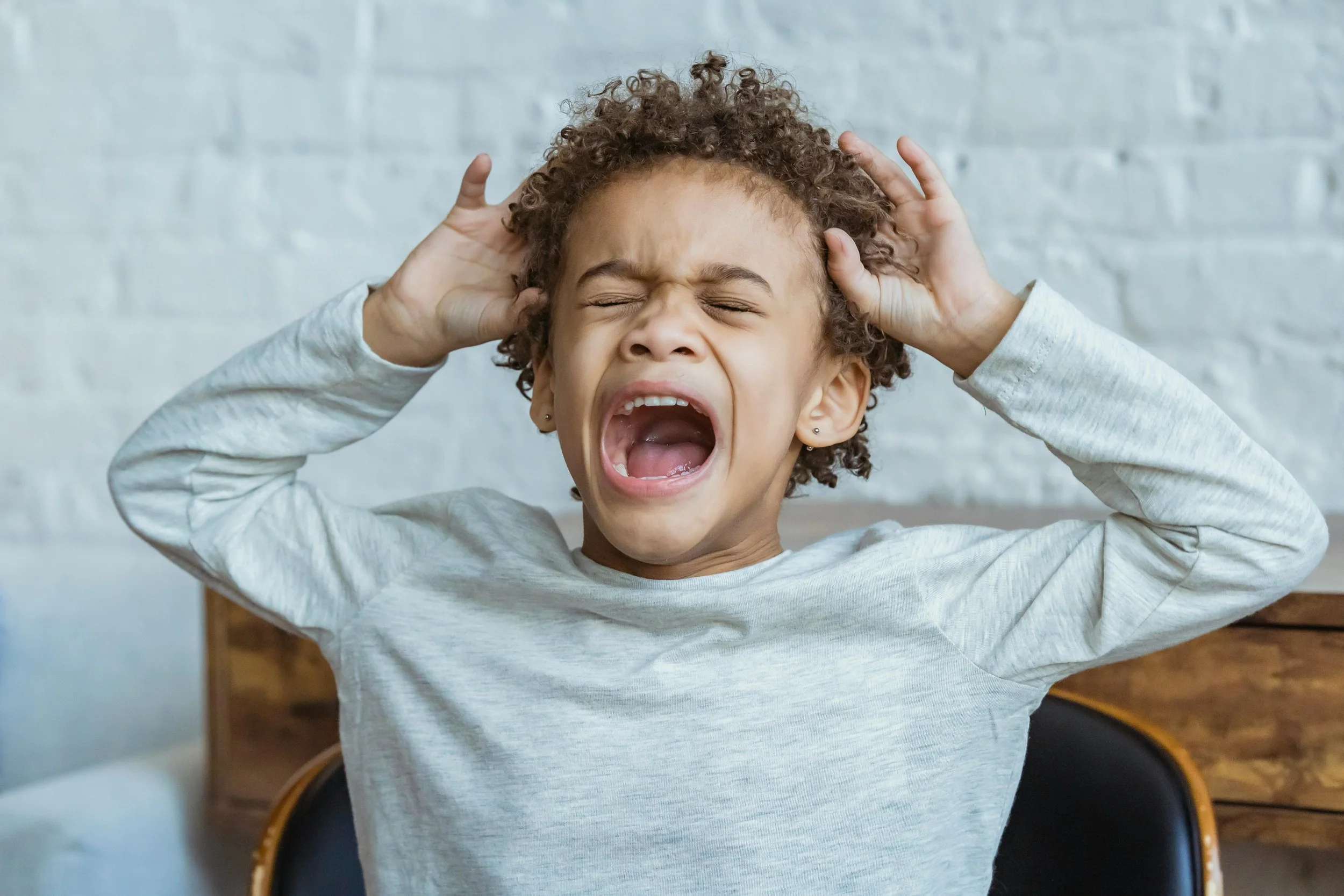
What Every Exhausted Parent Needs to Understand About Big Emotions, Impulsivity, and Behavior
Your child melts down over the smallest things.
Homework turns into a battle.
Transitions feel impossible.
You repeat yourself ten times before they listen.
One moment they are laughing and playful, the next they are screaming, shutting down, or completely overwhelmed.
And somewhere in the middle of the chaos, you start asking yourself:
Is this just their personality?
Is this normal development?
Am I being too soft? Too strict?
Or could this actually be ADHD?
For many parents, the hardest part is not the behavior itself.
It is the uncertainty.
You are trying to understand whether your child is struggling emotionally, neurologically, behaviorally, or all three at once.
At Living Optimally, we work with overwhelmed families every day who feel exhausted, confused, and emotionally drained trying to “figure out” their child. The truth is, many children who appear defiant, explosive, lazy, or emotionally reactive are actually struggling with emotional dysregulation, and sometimes ADHD is underneath it.
Understanding the difference can completely change how you respond to your child, and how your child begins to respond to you.
What Is Emotional Dysregulation?
Emotional dysregulation means a child has difficulty managing emotional responses in an age-appropriate way.
This can look like:
Explosive tantrums
Extreme frustration over small disappointments
Yelling, screaming, or aggression
Crying intensely and frequently
Difficulty calming down once upset
Impulsive emotional reactions
Trouble recovering after conflict
Emotional shutdowns or avoidance
Sensitivity to correction or criticism
These children are not usually trying to manipulate their parents.
Their nervous systems are overwhelmed.
Many parents describe feeling like they are “walking on eggshells” because they never know what might trigger an emotional outburst.
What ADHD Actually Looks Like in Children
Most people think ADHD only means hyperactivity or the inability to focus.
But ADHD is far more complex than that.
ADHD affects the brain’s executive functioning system, the part responsible for:
Emotional control
Impulse regulation
Attention
Organization
Task initiation
Frustration tolerance
Working memory
Self-monitoring
This is why many children with ADHD struggle emotionally long before parents recognize attention issues.
A child with ADHD may:
Interrupt constantly
Overreact emotionally
Become easily frustrated
Struggle with transitions
Seem oppositional
Forget instructions immediately
Have emotional outbursts after school
Hyperfocus on preferred activities
Appear “lazy” with tasks requiring mental effort
Struggle socially because of impulsivity
For many families, the emotional symptoms become more disruptive than the attention symptoms.
ADHD and Emotional Dysregulation Often Overlap
This is where many parents become confused.
A child can have:
Emotional dysregulation without ADHD
ADHD without severe emotional dysregulation
Or both occurring together
And when both exist together, life at home can feel incredibly intense.
Children with ADHD often experience emotions faster, stronger, and longer than other children their age.
Their brains struggle to “put the brakes on” emotional reactions.
So what parents often see is:
Constant conflict
Emotional explosions
Aggressive reactions
Difficulty listening
Mood swings
Refusal behaviors
School struggles
Sibling conflict
Exhaustion for the entire family
This does not mean your child is “bad.”
It means your child may lack the internal skills needed to regulate emotions effectively.
“But Aren’t Kids Supposed to Have Big Emotions?”
Yes, all children have emotional moments.
The question is not whether your child has emotions.
The question is:
Are the emotional reactions interfering with daily functioning?
Here are signs it may be more than normal development:
The intensity feels extreme for the situation
Emotional reactions happen daily
Recovery takes a very long time
The behavior impacts school, friendships, or family functioning
You feel emotionally exhausted all the time
Traditional parenting strategies are not working
Your child becomes emotionally dysregulated far more than peers their age
You feel like your child cannot tolerate frustration at all
Parents often minimize concerns because they hope their child will “grow out of it.”
Sometimes they do.
But sometimes children need support in developing emotional regulation skills before the patterns become more deeply ingrained.
Why Punishment Alone Usually Fails
This is one of the biggest mistakes exhausted parents make, not because they are bad parents, but because they are overwhelmed.
When behavior escalates repeatedly, parents naturally become more reactive:
More yelling
More consequences
More threats
More power struggles
But if the core issue is emotional regulation or executive functioning deficits, punishment alone rarely creates lasting change.
Why?
Because children cannot consistently access skills they do not yet fully possess.
That does not mean there should be no boundaries.
Children absolutely need structure, accountability, and consistency.
But they also need support learning:
Emotional awareness
Self-regulation
Frustration tolerance
Impulse control
Problem-solving
Coping strategies
Behavior improves most when parents understand what is driving the behavior underneath the surface.
What Parents Need Most: Clarity
One of the most powerful things a parent can hear is:
“You are not imagining this. Something deeper may be happening.”
Parents often spend years second-guessing themselves before seeking support.
Meanwhile:
Stress increases
Family relationships deteriorate
Children internalize shame
Parents lose confidence
Conflict becomes the family norm
Early understanding can change the trajectory for an entire family.
Whether your child has ADHD, emotional dysregulation, anxiety, sensory sensitivities, or developmental challenges, the goal is not labeling your child.
The goal is understanding your child.
When parents understand what they are seeing, they stop parenting from constant fear, frustration, and confusion, and begin responding with greater confidence, structure, and effectiveness.
There Is Hope, Even If Things Feel Exhausting Right Now
Many parents come to us feeling defeated.
They have read parenting books.
Tried consequences.
Watched videos.
Asked teachers for advice.
Listened to conflicting opinions from family members.
And still, home feels emotionally exhausting.
But children can learn emotional regulation skills.
Families can rebuild connection.
Parents can regain confidence.
And behavior can improve with the right support, understanding, and intervention.
Sometimes the biggest transformation begins when a parent stops asking:
“What is wrong with my child?”
And starts asking:
“What is my child struggling with underneath this behavior?”
That question changes everything.
When to Seek Professional Support
It may be time to seek additional support if:
Your child’s behavior feels unmanageable
Emotional outbursts are becoming frequent or intense
School concerns are increasing
You and your co-parent constantly disagree about discipline
You feel emotionally burned out
Your child struggles socially or academically
Family stress is affecting everyone in the home
Support is not failure.
It is often the first step toward relief, clarity, and healing for the entire family.
Living Optimally
At Living Optimally, we help parents better understand the “why” behind challenging behaviors so families can move from constant conflict toward greater connection, emotional stability, and confidence.