

Why Do I Feel Like I'm Losing Myself? The Hidden Emotional Impact of Perimenopause and Menopause in Bergen County Women
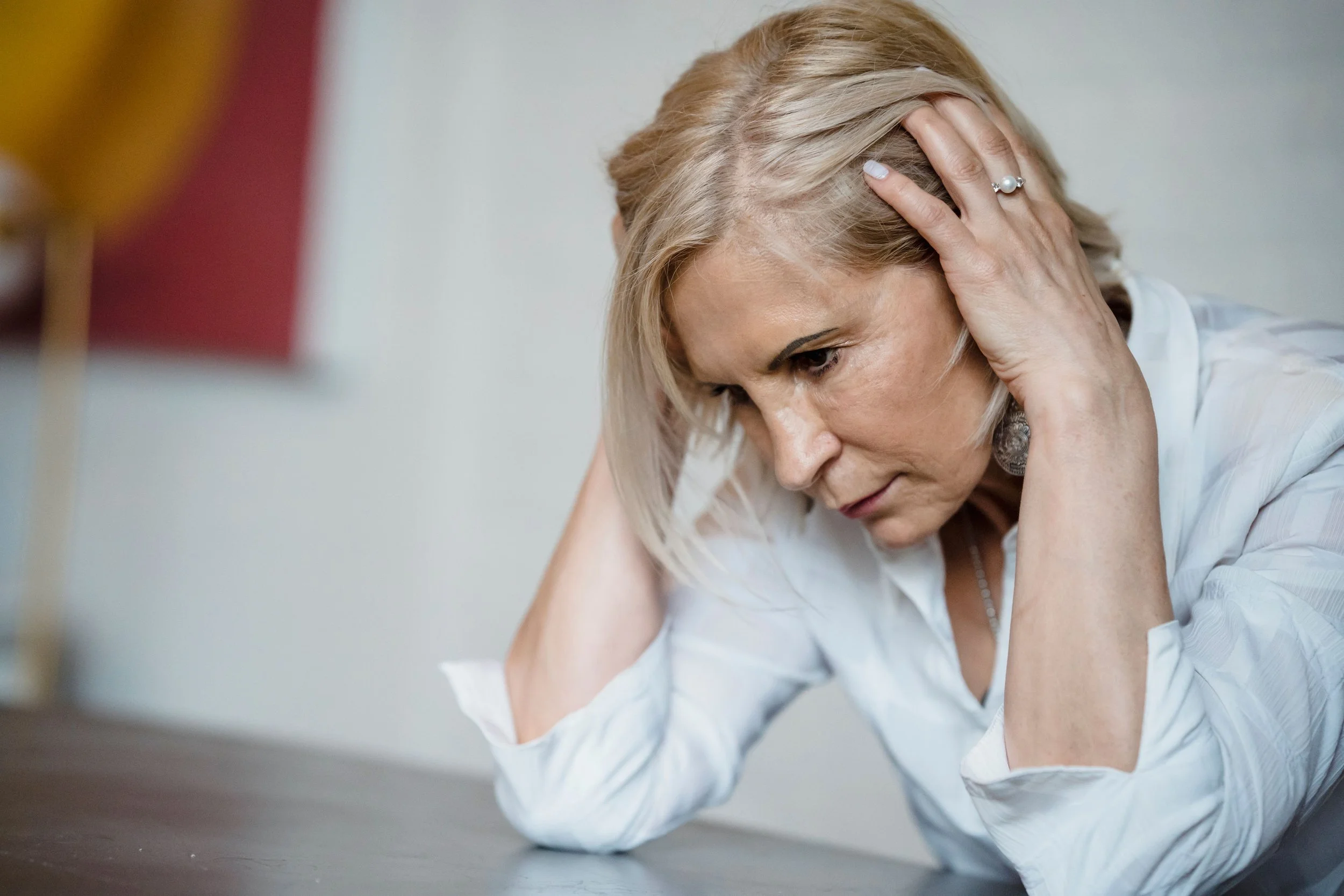
If you've found yourself thinking, "I don't feel like myself anymore," you're not alone. Many women going through perimenopause and menopause are surprised by how much these changes affect not just their bodies, but their emotions, confidence, relationships, and sense of self. You may feel more anxious than usual, struggle with brain fog, lose patience more quickly, or simply feel disconnected from the person you used to be. The good news is that these experiences are common and often linked to the hormonal and life changes that occur during this stage of life. Understanding what's happening can help you feel less alone, more in control, and hopeful about finding your way back to yourself.
if you've been ending your days completely drained, feeling like you're falling short no matter how hard you try, and wondering where the old "you" went, you're not alone.
Maybe you're juggling work, family responsibilities, aging parents, a busy household, and everyone else's needs while quietly struggling with anxiety, brain fog, mood swings, or exhaustion. You may find yourself feeling more emotional, less patient, and constantly questioning whether you're doing enough.
In this article, you'll learn:
• Why so many Bergen County mothers feel overwhelmed, guilty, and stuck in a cycle of self-criticism
• How perimenopause and menopause can affect your mood, confidence, energy, and ability to cope with everyday stress
• Why feeling exhausted doesn't mean you're failing—it may be a sign that you've been carrying too much for too long
• The often-overlooked connection between hormonal changes, parenting demands, and emotional burnout
• Practical ways to be kinder to yourself, rebuild confidence, and reconnect with the person you know yourself to be
Most importantly, you'll discover that you're not failing as a mother, partner, or person. You're navigating a major life transition while carrying an incredible amount of responsibility and you deserve support, too.
When Your Body Stops Feeling Familiar
One of the most unsettling parts of perimenopause and menopause is feeling like your body no longer works the way it used to.
You may find yourself wondering, "What's happening to me?"
You're exhausted even after a full night's sleep. You wake up at 3 a.m. and can't fall back asleep. The weight that was once easy to manage seems to appear out of nowhere. Your skin changes. Your joints ache. Your energy isn't what it used to be.
But it's not just the physical symptoms.
Your patience feels shorter. Small frustrations feel bigger than they used to. You may find yourself feeling emotional, irritable, anxious, or overwhelmed by things that never bothered you before.
And then that quiet thought starts to creep in:
"I just don't feel like myself anymore."
For many women, this is one of the hardest parts of the menopause transition. It's not simply about hot flashes or missed periods—it's the feeling that you've somehow become a stranger in your own body.
These changes can be especially frustrating if you've always been active, independent, and confident in your ability to manage life's challenges. When your body and emotions suddenly feel unpredictable, it's easy to start questioning yourself.
The good news is that you're not imagining it and Many women experience this sense of disconnect during perimenopause and menopause. Understanding why it's happening is often the first step toward feeling more like yourself again.
When Parenting Stress and Menopause Collide
Many women know to expect physical symptoms like hot flashes, night sweats, or changes in their menstrual cycle.
What often catches them off guard is the emotional toll.
While hormonal changes are affecting your mood, sleep, patience, memory, and energy levels, life isn't slowing down. In fact, for many women, it's becoming more demanding than ever.
You may be helping a teenager navigate college applications, supporting a child with anxiety or ADHD, managing a busy family schedule, keeping up with work responsibilities, checking in on aging parents, and trying to maintain your relationships—all while wondering when you'll have a moment to take care of yourself.
For many Bergen County women, it can feel like everyone needs something from you.
Your children need you.
Your parents need you.
Your partner needs you.
Your employer needs you.
And somewhere along the way, your own needs get pushed to the bottom of the list.
This stage of life is often called the "sandwich generation" because many women find themselves caring for both their children and their aging parents at the same time. But what that phrase doesn't capture is how lonely, exhausting, and emotionally overwhelming it can feel.
You may feel pulled in a dozen different directions every day.
Constantly responsible.
Constantly needed.
Yet somehow invisible.
You keep showing up for everyone else while quietly carrying stress, exhaustion, worry, and self-doubt on your own.
If you've found yourself crying more easily, feeling overwhelmed by things you used to handle with ease, or wondering why you're struggling so much lately, it doesn't mean you're weak. It doesn't mean you're failing.
It may simply mean you've been carrying far more than one person was ever meant to carry alone.
The Weight of Never Feeling Good Enough
Bergen County is home to hardworking, ambitious, and deeply devoted mothers.
Yet behind the scenes, many women carry the quiet burden of feeling like they're falling short.
Every day, they're surrounded by impossible expectations.
Social media showcases picture-perfect families.
Conversations at school and in the community often revolve around achievements, accomplishments, and doing more.
The pressure can feel relentless:
Volunteer more.
Exercise more.
Cook healthier meals.
Attend every school event.
Be more involved.
Look younger.
Stay productive.
Stay positive.
Stay grateful.
Stay organized.
Over time, these messages can become internalized.
No matter how much you're doing, it still doesn't feel like enough.
Instead of celebrating your efforts, you focus on where you believe you've fallen short. Self-compassion slowly gives way to self-criticism, and the inner voice becomes one of judgment rather than kindness.
The truth is you were never meant to meet impossible standards. You were meant to be human.
The Impact on Relationships
For many couples, menopause can introduce unexpected challenges that affect communication, intimacy, emotional connection, and day-to-day interactions. Partners may find themselves navigating unfamiliar territory, unsure how to support one another or make sense of the changes taking place.
Loss of libido and emotional exhaustion can also affect intimate relationships.
Partners may struggle to understand the changes, especially when communication has become strained through fatigue, irritability, or emotional withdrawal.
What is often interpreted as distance, moodiness, or disinterest may be
the result of someone trying to cope with physical, emotional, and hormonal changes all at once.
One of the most important challenges that couples face is lack of communication it may be difficult to discuss lack of intimacy, physical symptoms and emotional changes.
When symptoms are not openly discussed assumptions can develop where one partner may feel unsupported or misunderstood. They may also feel unsure of how to help.
How Couples Therapy Can Help
Couples therapy provides an opportunity for both partners to explore the impact of menopause on their relationship in a supportive and non-judgmental environment.
At our practice, we help couples:
Improve communication and understanding
Navigate changes in intimacy and sexual relationships
Develop healthy ways of expressing needs and concerns
Reduce conflict and misunderstandings
Strengthen emotional connection and support
Build strategies for managing stress and life transitions together
Therapy is not about assigning blame. Instead, it focuses on helping couples work as a team, developing greater empathy and understanding for one another's experiences.
Every relationship experiences challenges during periods of change, and menopause is one of the most significant transitions many couples will face.
At our practice, our experienced therapists support individuals and couples navigating the emotional and relational impact of menopause. Whether you are experiencing difficulties with communication, intimacy, emotional wellbeing, or relationships.